A Town Named for the Prairie
Deer Park calls itself the Birthplace of Texas. According to the city, the treaty papers after the Battle of San Jacinto were first drafted at Dr. George Moffitt Patrick's cabin on Buffalo Bayou, in what is now Deer Park, and a replica of that cabin stands in the city today. The town itself was platted in 1892 by Simeon Henry West, a former Illinois legislator. He named it for the large number of deer roaming the coastal prairie.
That prairie matters for tree care. Deer Park was open grassland, not forest, so most of the trees in town were planted by people, and many were chosen for fast shade rather than long life. Our crew trims, removes, grinds stumps and handles storm cleanup throughout Deer Park. Quotes are free, and the line is answered any hour of the day or night.
Clay Soil and Shallow Roots
Former prairie on the upper Texas coast usually means dense clay that drains slowly. Tree roots in that soil stay close to the surface, which leads to a few common Deer Park problems:
- Lifted sidewalks and driveways from surface roots growing under paving.
- Trees that tip rather than snap when long rain softens the ground before a windstorm.
- Root damage from construction when pools, patios and slabs are poured close to trees.
- Drought stress in summer, when clay dries, shrinks and cracks around roots.
Mulch rings, deep watering during drought and keeping construction away from root zones all help trees cope.
Fast Trees That Don't Last
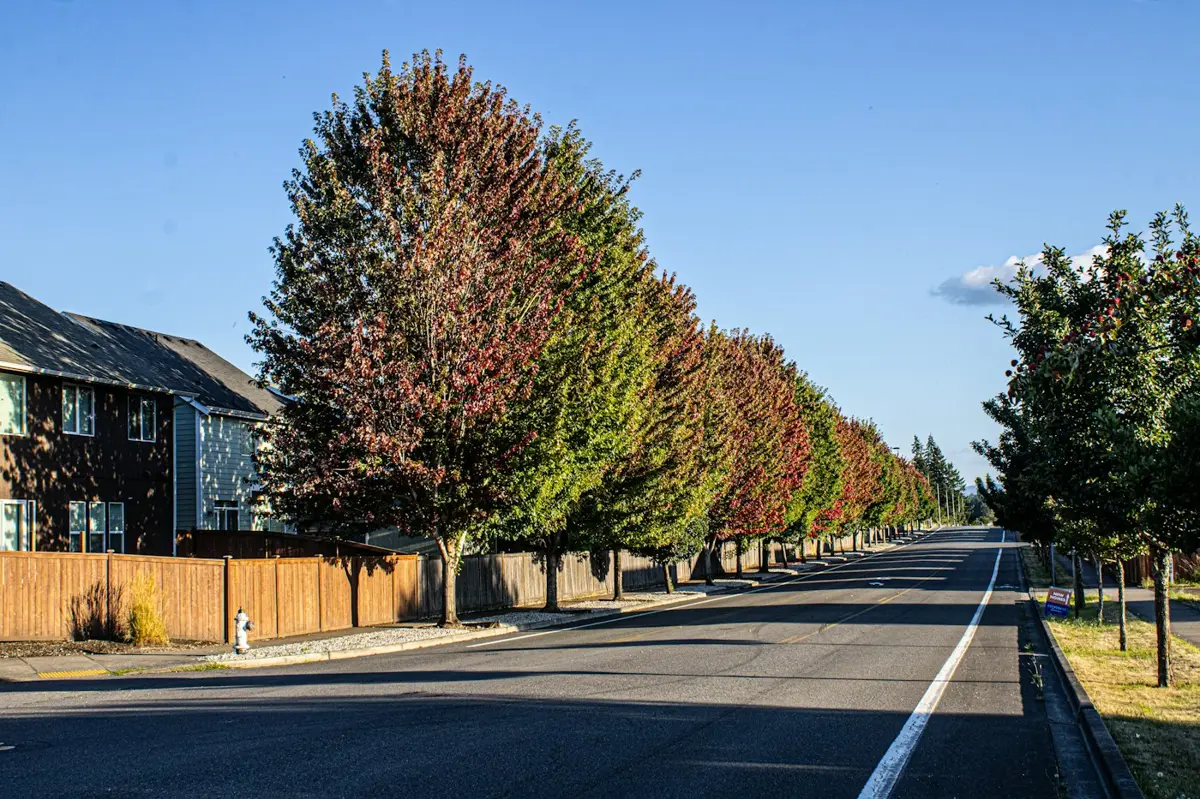
Because Deer Park neighborhoods had to plant their shade from scratch, yards often have fast-growing trees: Arizona ash, water oak, silver maple, hackberry and Chinese tallow. They grow quickly, but they also decline quickly, often becoming hollow, brittle or top-heavy within a few decades. These are the trees we most often remove in Deer Park, especially when they lean over a house, fence or pool. When replanting, sturdier natives such as live oak, cedar elm and bald cypress hold up better in wind and wet soil. See tree removal for how we take down trees in tight backyards.
Trimming Typical Deer Park Yards
Many Deer Park homes have a familiar layout: a shade tree in front, one or two in back, a wooden privacy fence and often a pool. Pruning here usually focuses on:
- Keeping limbs off the roof and out of gutters.
- Clearing branches away from the service line to the house.
- Reducing limbs that hang over the pool and drop leaves into it.
- Cutting back branches that rest on or rub the fence.
- Removing deadwood before hurricane season.
Oak pruning is scheduled late fall through January. More on our methods is on the tree trimming and pruning page.
Beryl and Deer Park
Hurricane Beryl in July 2024 left trees and limbs down across east Harris County and took out power for much of the area. Even the San Jacinto Battleground next door in La Porte stayed closed for days until power was restored. Many of the trees that fell in Deer Park were the fast-growing, already-declining species described above. If a tree in your yard lost large limbs during Beryl, check the old wounds for decay and cracks before the next storm season.
Power Lines and Emergencies
Deer Park is in the CenterPoint Energy service area. If a tree is touching a primary line, call CenterPoint and keep everyone away. When a tree falls on your house, car or fence, our emergency tree service responds at any hour, and our storm damage cleanup crew handles debris and hanging limbs after the storm passes.
Stump Grinding in Tight Backyards
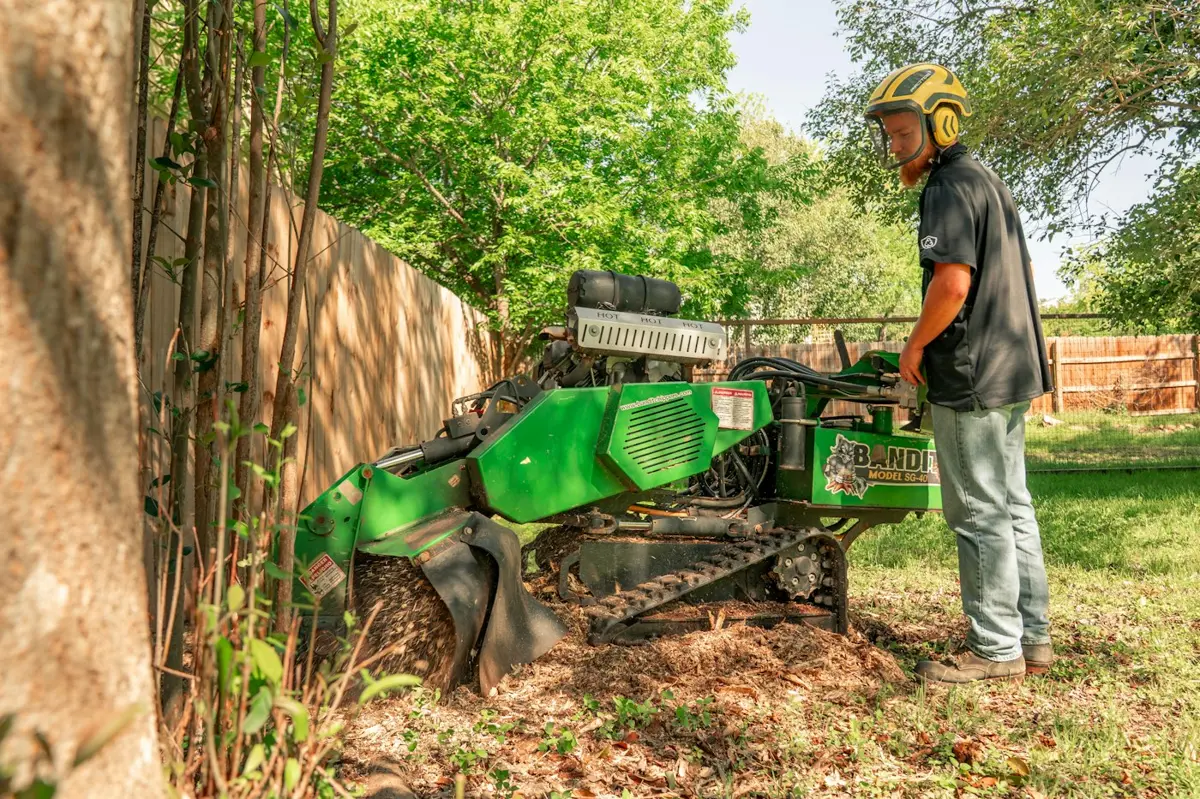
Fences, pools and patios make backyard stump grinding tricky. We use equipment that fits through standard gates, protect pool decks and patios, and clean up chips when the job is done. Grinding takes stumps below grade so you can lay sod or replant. Fast-growing stumps like tallow and hackberry can resprout, so grinding them is better than leaving them. See stump grinding.
Trees, Clay and Foundations
Clay soil swells when wet and shrinks when dry. Large, thirsty trees growing close to a house can pull a lot of moisture out of the soil under one side of the slab in a dry summer, and that uneven drying is one of several things that can contribute to foundation movement. It is not the only cause, and a foundation contractor is the right person to diagnose cracks. From the tree side, the useful steps are simple: keep new trees well away from the house, water the soil evenly around the foundation during long droughts, and consider removing a large, fast-growing tree that is planted right against the slab. If a foundation company recommends a root barrier or removal, we can do the tree part of the work.
Deer Park Tree Work Costs
Pricing depends on tree size, access through gates, closeness to pools, fences and lines, and cleanup. Angi's League City data shows typical trim-or-remove jobs at about $376 to $919, and stump grinding at about $220 to $633. Homeyou's Houston-area data puts medium tree removal around $520 to $710. Every job is quoted in person. See our tree service League City TX page for everything else we do.
Deer Park Tree Service FAQs
Who handles trees on power lines in Deer Park?
Deer Park is in the CenterPoint Energy service area. Call CenterPoint for any tree touching a primary line.
Why do so many trees in Deer Park have shallow roots?
Heavy clay soil and a high water table keep roots near the surface. That is why trees here can lift sidewalks and why some tip over in long, wet storms.
What trees hold up best in Deer Park storms?
Live oak, cedar elm and bald cypress tend to handle wind and wet soil better than fast-growing trees like Arizona ash or water oak.
Do you grind stumps near pools and fences?
Yes. Our grinder can reach stumps in tight backyards near pools, fences and patios, and we clean up the chips afterward.
Get a Deer Park Tree Quote
Trimming, removals, stumps and storm cleanup anywhere in Deer Park. Emergency calls answered 24/7.
Tap to Call 📞 (281) 800-9792